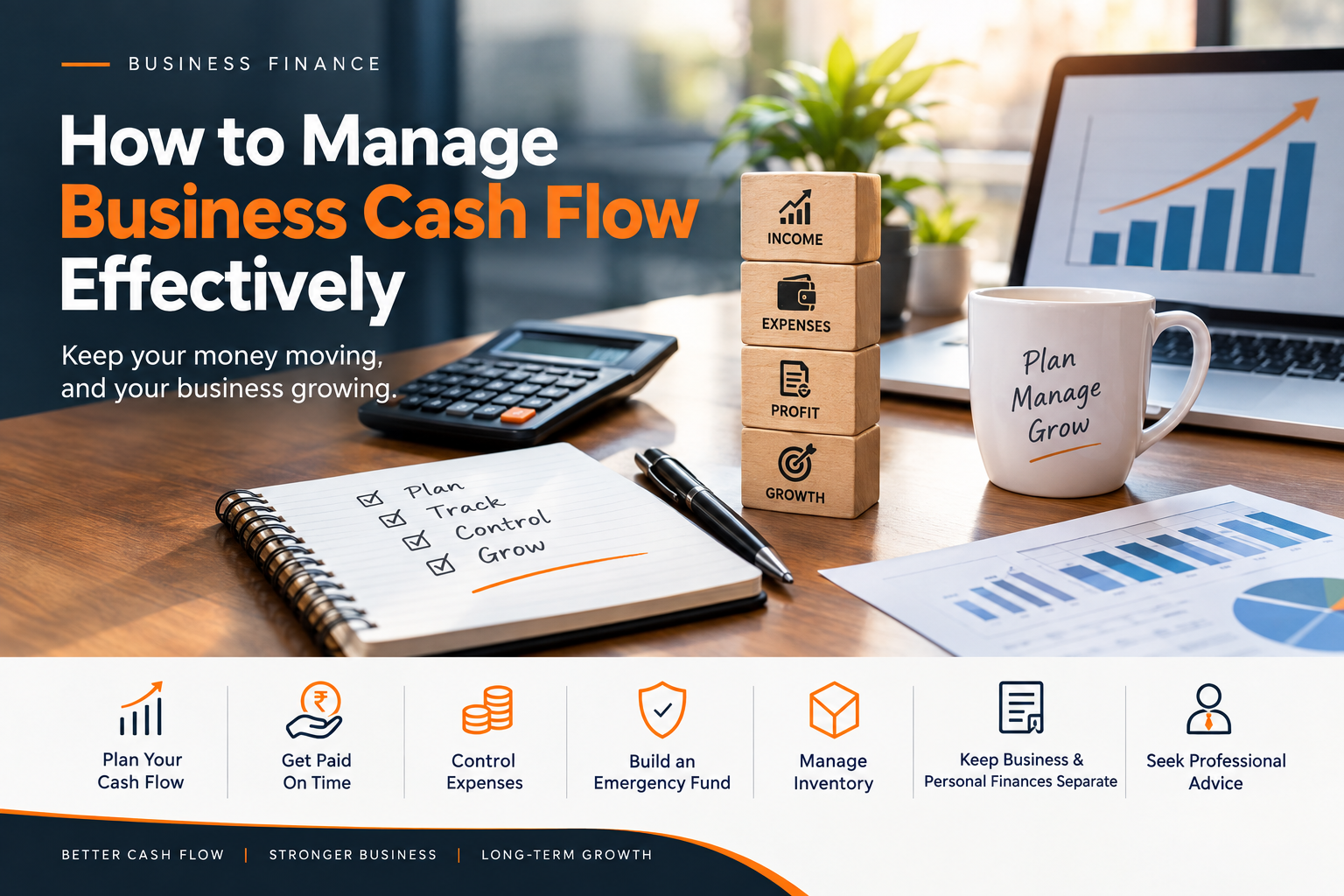
Cash flow is one of the most important aspects of running a successful business. Even a profitable business can face financial difficulties if it does not manage its cash inflows and outflows properly. Effective cash flow management ensures that a business has enough money available to pay employees, suppliers, taxes, loans, and other operating expenses on time.
Whether you run a small business, startup, or established company, understanding and managing cash flow can help you maintain financial stability and support long-term growth.
What Is Business Cash Flow?
Business cash flow refers to the movement of money coming into and going out of a business.
Cash inflow may include:
Customer payments
Sales revenue
Business loans
Investments
Other sources of income
Cash outflow may include:
Employee salaries
Rent and utilities
Supplier payments
Taxes
Loan repayments
Marketing and operating expenses
The goal is to maintain a healthy balance between cash coming in and cash going out.
- Prepare a Cash Flow Forecast
A cash flow forecast helps you estimate how much money your business will receive and spend over a specific period.
Regularly monitor:
Expected customer payments
Upcoming expenses
Tax payments
Loan installments
Supplier payments
Payroll expenses
A proper forecast can help you identify potential cash shortages before they become serious problems.
- Track Your Receivables
Late customer payments are one of the common reasons businesses experience cash flow problems. Establish clear payment terms and follow up with customers when invoices become due.
You can improve collections by:
Sending invoices on time
Clearly mentioning payment deadlines
Offering convenient payment methods
Following up on overdue invoices
Maintaining proper records of outstanding payments
Faster collections can help maintain a steady flow of working capital.
- Control Business Expenses
Review your expenses regularly and identify areas where unnecessary costs can be reduced. This does not mean cutting essential expenses, but rather making sure that every business expense provides value.
Consider reviewing:
Office expenses
Software subscriptions
Marketing costs
Travel expenses
Inventory costs
Administrative expenses
Controlling unnecessary spending can improve your available cash without affecting essential business operations.
- Maintain an Emergency Cash Reserve
Unexpected expenses can occur at any time. Equipment repairs, delayed payments, sudden business opportunities, or other unforeseen costs can put pressure on your finances.
Maintaining an emergency cash reserve can provide your business with a financial cushion and reduce the need to depend immediately on high-cost borrowing.
- Manage Inventory Efficiently
For businesses that maintain physical inventory, excessive stock can tie up valuable cash. At the same time, insufficient inventory can lead to missed sales opportunities.
Analyze your sales patterns and maintain inventory according to actual business requirements. Effective inventory management helps prevent unnecessary cash from being locked into unsold products.
- Separate Business and Personal Finances
Business owners should keep personal and business finances separate. Using separate bank accounts and maintaining proper accounting records makes it easier to understand the actual financial position of the business.
It also helps with:
Accurate bookkeeping
Tax compliance
Financial reporting
Expense tracking
Business planning
- Review Your Cash Flow Regularly
Cash flow management should not be a one-time activity. Review your cash flow statements regularly to understand your business’s financial position.
Compare your actual cash flow with your forecast and identify any major differences. Regular monitoring allows you to make timely financial decisions.
- Take Professional Accounting Advice
Managing cash flow can become complicated as a business grows. A professional Chartered Accountant can help you maintain accurate financial records, analyze cash flow, plan taxes, monitor expenses, and make informed financial decisions.
Professional financial guidance can also help business owners identify potential risks and improve overall financial management.
Conclusion
Effective cash flow management is essential for maintaining a financially healthy business. By forecasting cash flow, collecting payments on time, controlling expenses, managing inventory, maintaining reserves, and reviewing finances regularly, businesses can improve their financial stability.
Good cash flow management is not just about having money in the bank—it is about making sure your business has the right amount of cash available at the right time to meet its financial obligations and support future growth.
If you need professional assistance with accounting, taxation, financial planning, or cash flow management, consulting a qualified Chartered Accountant can help you make better-informed financial decisions.