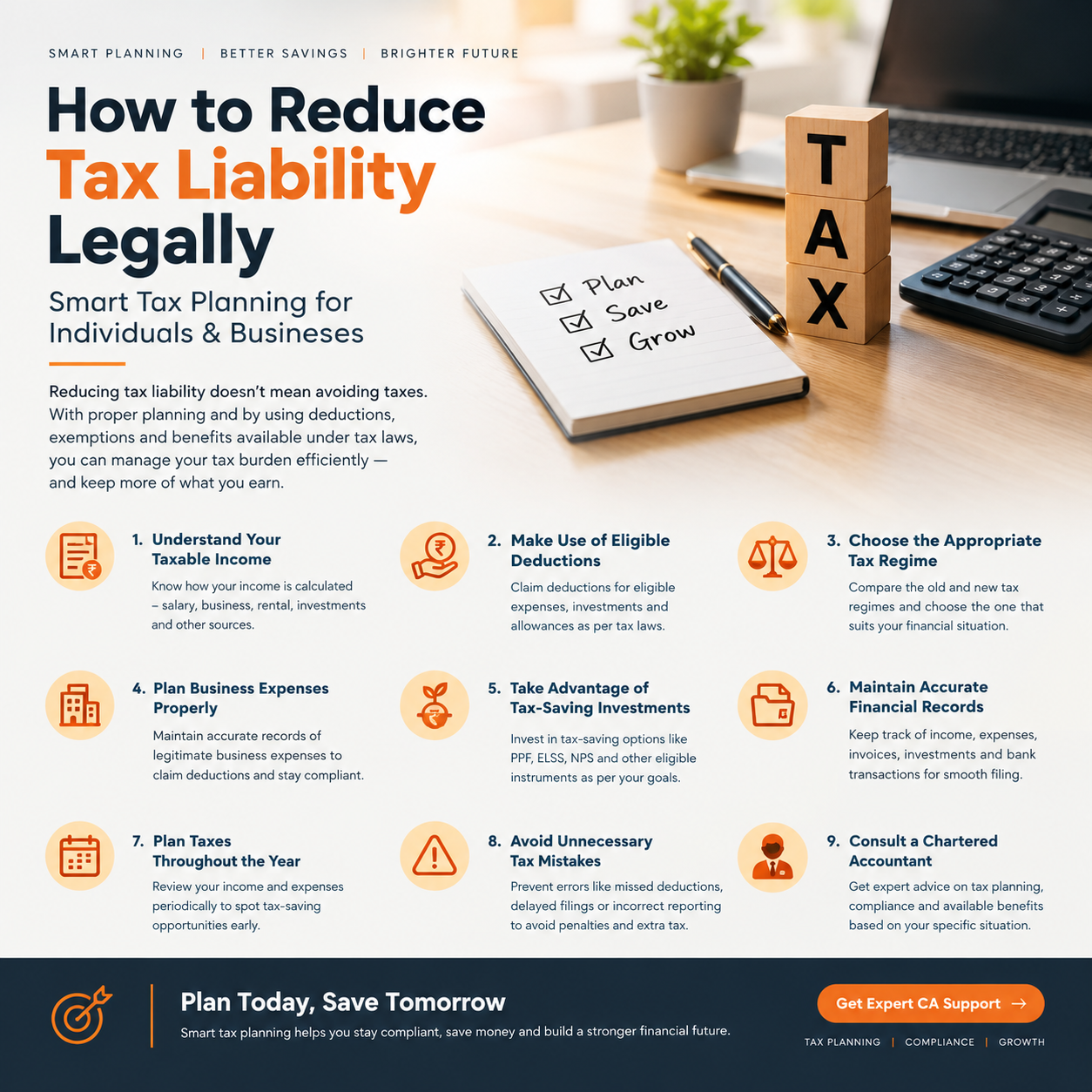
Reducing tax liability does not mean avoiding taxes. With proper tax planning and by using deductions, exemptions, and benefits available under applicable tax laws, individuals and businesses can legally manage their tax burden more efficiently.
A well-planned tax strategy can help you save money, improve cash flow, and avoid unnecessary tax-related complications.
- Understand Your Taxable Income
The first step toward reducing tax liability is understanding how your taxable income is calculated. Different types of income may be treated differently for tax purposes.
Review your salary, business income, rental income, investment income, and other sources of income to understand your overall tax position.
- Make Use of Eligible Tax Deductions
Taxpayers may be eligible for certain deductions depending on their income, investments, expenses, and applicable tax regime.
Keeping proper records of eligible expenses and investments can help you claim the deductions available to you and avoid paying more tax than necessary.
- Choose the Appropriate Tax Regime
For eligible individual taxpayers in India, the choice between the applicable tax regimes can affect the amount of tax payable.
Before filing your return, compare the tax liability under the available options based on your income, deductions, and financial situation.
- Plan Business Expenses Properly
Businesses should maintain accurate records of legitimate business expenses. Expenses that are incurred wholly and exclusively for business purposes may be deductible subject to applicable tax laws.
Proper accounting and documentation can help businesses claim eligible expenses while maintaining compliance.
- Take Advantage of Available Tax-Saving Investments
Certain investments and payments may qualify for tax benefits under applicable provisions of the Income Tax Act.
Instead of making last-minute investments only to save tax, it is better to plan investments according to your financial goals and applicable tax rules.
- Maintain Accurate Financial Records
Proper bookkeeping is essential for effective tax planning. Maintain records of income, expenses, invoices, investments, bank transactions, and other relevant financial documents.
Accurate records make it easier to calculate taxable income correctly and support claims made in your tax return.
- Plan Taxes Throughout the Year
Tax planning should not be limited to the end of the financial year. Reviewing your income and expenses periodically allows you to identify potential tax-saving opportunities in advance.
For businesses, regular financial reviews can also help with better cash-flow management and financial decision-making.
- Avoid Unnecessary Tax Mistakes
Incorrect reporting, missed deductions, delayed filings, or inadequate documentation can result in additional tax, interest, penalties, or compliance issues.
Professional guidance can help taxpayers understand their obligations and reduce the risk of avoidable errors.
- Consult a Chartered Accountant
Tax laws can be complex and may change over time. A Chartered Accountant can review your financial position, identify applicable tax benefits, help with tax planning, and ensure that your tax filings are properly prepared.
Professional tax planning focuses on legal compliance and efficient use of available provisions, rather than tax avoidance.
Conclusion
Reducing tax liability legally starts with proper planning, accurate financial records, and a clear understanding of applicable tax provisions. Whether you are an individual, freelancer, startup, or established business, timely tax planning can help you manage your finances more effectively.
Need professional assistance with tax planning and compliance? Connect with a qualified Chartered Accountant to understand the tax provisions applicable to your specific situation and plan your finances accordingly.