A business audit is an important process that helps verify the accuracy of financial records and ensures that the business is following applicable accounting and compliance requirements. Proper preparation before an audit can make the process smoother, faster, and more efficient.
Whether you run a small business, startup, or established company, keeping your financial records organized can help avoid unnecessary delays and complications during the audit.
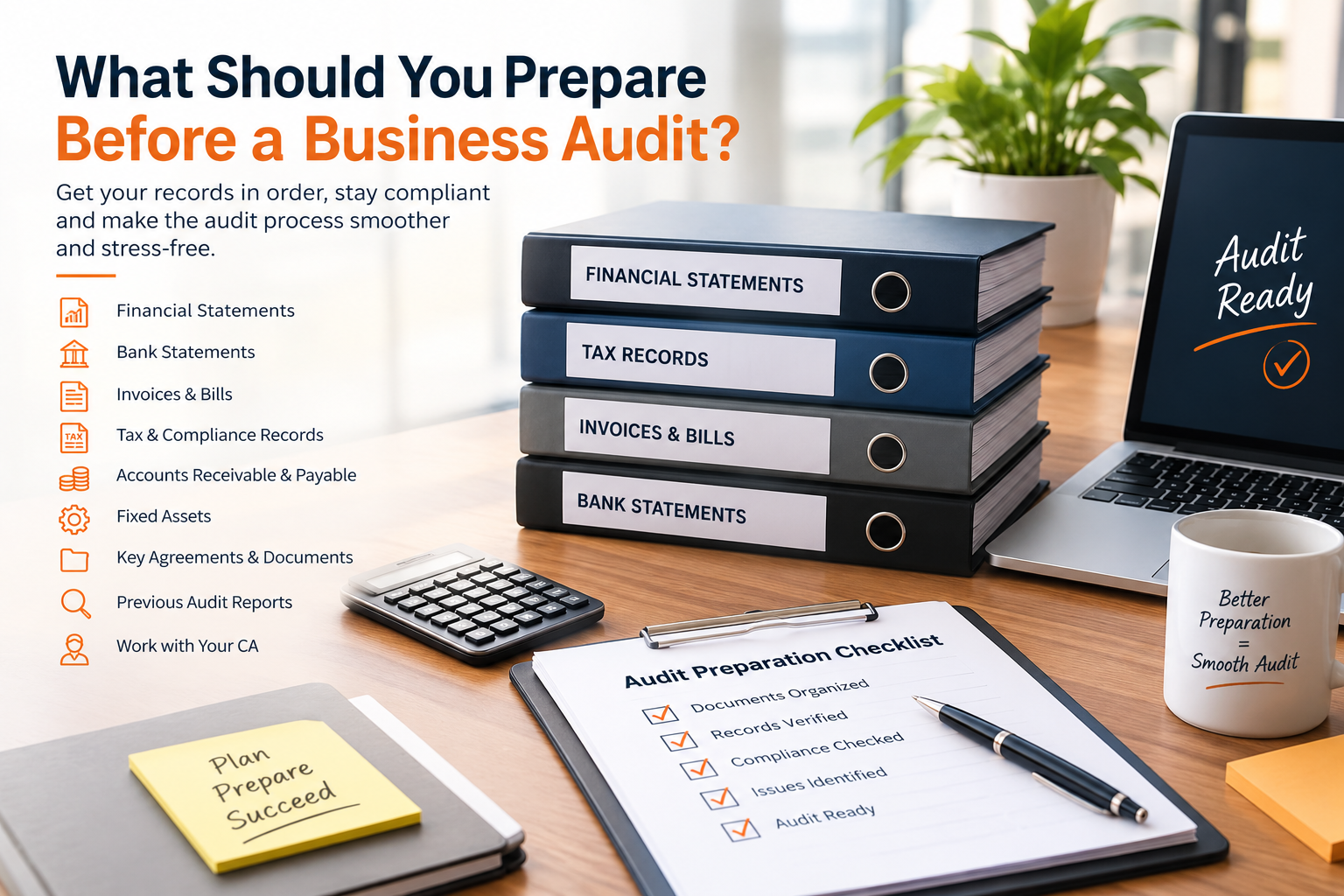
Here are some important things you should prepare before a business audit.
- Organize Your Financial Statements
Make sure all important financial statements are updated and properly organized. These may include:
Balance Sheet
Profit and Loss Statement
Cash Flow Statement
Trial Balance
General Ledger
Accurate and updated financial statements give the auditor a clear picture of the company’s financial position.
- Keep Bank Statements and Reconciliations Ready
Collect all business bank statements for the relevant financial period. Bank accounts should also be properly reconciled with the accounting records.
Any differences between bank statements and accounting records should be identified and corrected before the audit begins.
- Review Your Invoices and Bills
Make sure sales invoices, purchase bills, expense receipts, and other supporting documents are properly maintained.
Auditors may review these documents to verify whether the transactions recorded in the books are genuine and properly supported.
- Check Your Tax and Compliance Records
Keep relevant tax and compliance documents ready, such as:
GST returns and records
Income tax documents
TDS records
Tax payment challans
Previous tax filings
Other applicable statutory documents
Reviewing these records in advance can help identify missing documents or potential compliance issues.
- Verify Accounts Receivable and Payable
Review outstanding customer payments and amounts payable to suppliers. Make sure the balances recorded in your books match the supporting records.
If there are old or disputed balances, prepare an explanation or supporting documentation for them.
- Review Fixed Assets
Prepare an updated list of business assets such as computers, machinery, furniture, vehicles, and equipment.
Check whether the recorded asset values, purchases, disposals, and depreciation are properly reflected in the accounts.
- Identify Unusual Transactions
Review your accounts for unusual, large, or one-time transactions. Keep proper supporting documents and explanations for such transactions.
Identifying these transactions before the audit allows you to address potential questions in advance.
- Keep Important Agreements and Documents Ready
Collect important business documents such as:
Loan agreements
Lease agreements
Major contracts
Investment documents
Insurance policies
Partnership or shareholder agreements
These documents may be required to verify specific financial transactions or business arrangements.
- Review Previous Audit Observations
If your business has been audited previously, review the observations, adjustments, or recommendations from the previous audit.
Make sure previously identified issues have been addressed wherever applicable.
- Work With Your Chartered Accountant
A Chartered Accountant can help review your financial records before the audit, identify potential issues, organize documentation, and ensure that the required information is available.
Professional guidance can make the audit process more efficient and help reduce the chances of last-minute problems.
Conclusion
Preparing properly before a business audit can save time, reduce stress, and help ensure that financial records are accurate and well-supported. Businesses should organize their accounts, verify important transactions, maintain supporting documents, and address potential issues before the audit begins.
With proper preparation and professional guidance from a Chartered Accountant, businesses can approach the audit process with greater confidence and efficiency.