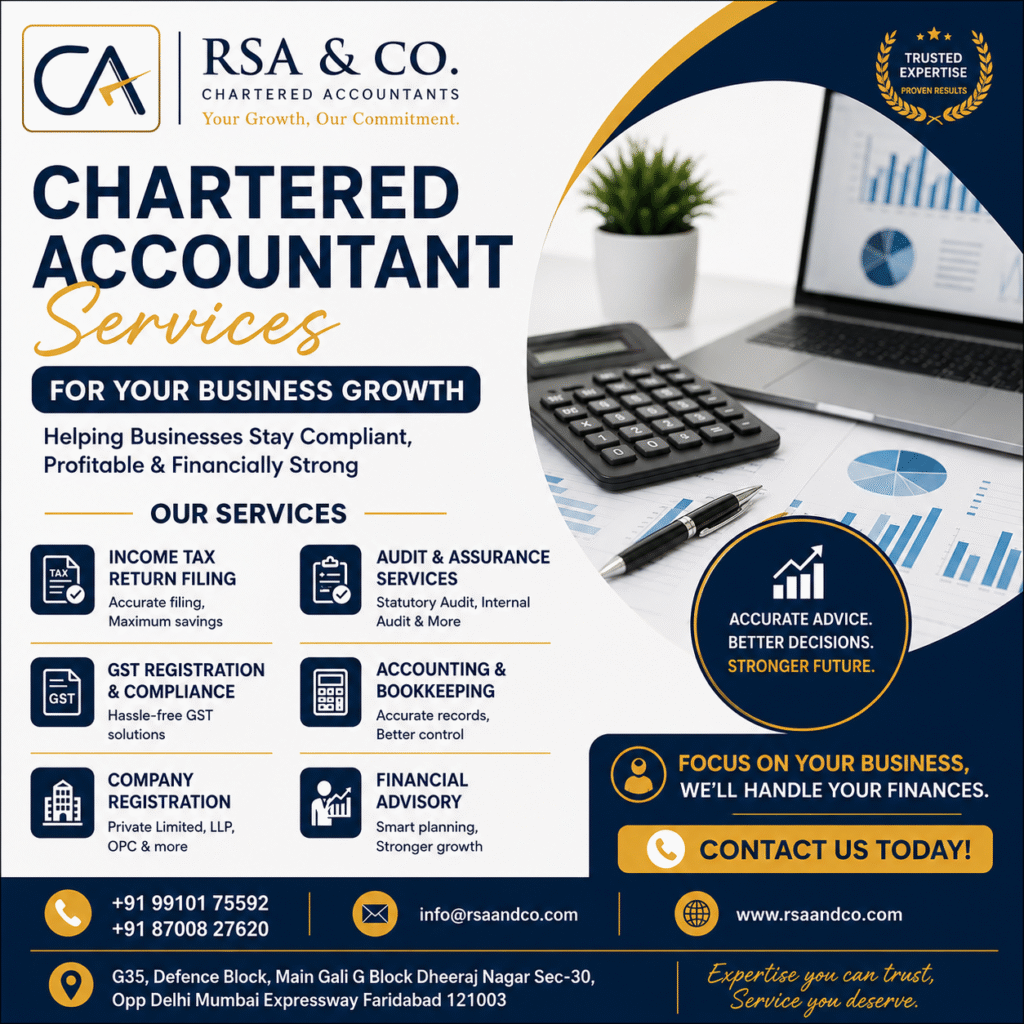
Why Small Businesses Need a Chartered Accountant
Small businesses often lack a dedicated finance team, making it extremely difficult to manage tasks like taxation, GST, accounting, and compliance. A Chartered Accountant handles these responsibilities professionally, allowing business owners to focus on growing their business while ensuring that financial and compliance-related responsibilities are managed efficiently.
What Does a Chartered Accountant Do for a Small Business?
A Chartered Accountant assists small businesses in effectively managing their financial and legal operations. They maintain organized accounts, handle tax and GST-related tasks, prepare financial records, and ensure compliance with all legal regulations. Additionally, they provide guidance to business owners on budgeting, cash flow management, and making informed business decisions. Their expertise helps small businesses avoid financial risks and achieve long-term growth.
1 Maintaining Accurate Financial Records
A Chartered Accountant maintains accurate financial records, ensuring that businesses have access to reliable financial information whenever needed. In small businesses, a Chartered Accountant is also responsible for maintaining financial reports.
2 GST Registration and Filing
A Chartered Accountant assists businesses with GST registration, return filing, and compliance requirements. They also help resolve any GST-related issues that may arise during the process.
3 Cash Flow Management
A Chartered Accountant personally handles a small business’s cash flow management—tracking where cash comes from and where it goes, as well as monitoring inflows and outflows. Managing cash flow is a key responsibility of a Chartered Accountant A clear understanding of cash flow helps business owners make informed financial decisions and maintain the financial stability of the business.
4 Business Registration
A Chartered Accountant assists in selecting the right business structure and completing necessary registration procedures during the establishment of a new business. They provide guidance on choosing between structures such as proprietorship, partnership, LLP, or private limited company based on business requirements. Additionally, they help obtain GST registration and other essential licenses and registrations.
5 Financial Planning and Budgeting
A Chartered Accountant can prove invaluable to a small business by assisting with financial planning and instilling confidence in the owner that strategic planning will drive business growth. They also help prepare budgets to effectively manage cash inflows and outflows, thereby facilitating the business’s development This helps businesses maintain financial stability and achieve sustainable long-term growth.
6 Tax Planning and Compliance
A Chartered Accountant helps small businesses comply with tax regulations and file tax returns accurately and on time. They also identify tax-saving opportunities that can reduce liabilities and improve overall financial efficiency.
Conclusion
A Chartered Accountant plays a vital role beyond mere record-keeping; they act as a trusted partner and advisor, contributing significantly to a small business’s financial health. By managing critical tasks such as taxation and legal compliance, they enable business owners to focus on growth and success. Therefore, hiring a Chartered Accountant is a step towards taking a business to the next level.