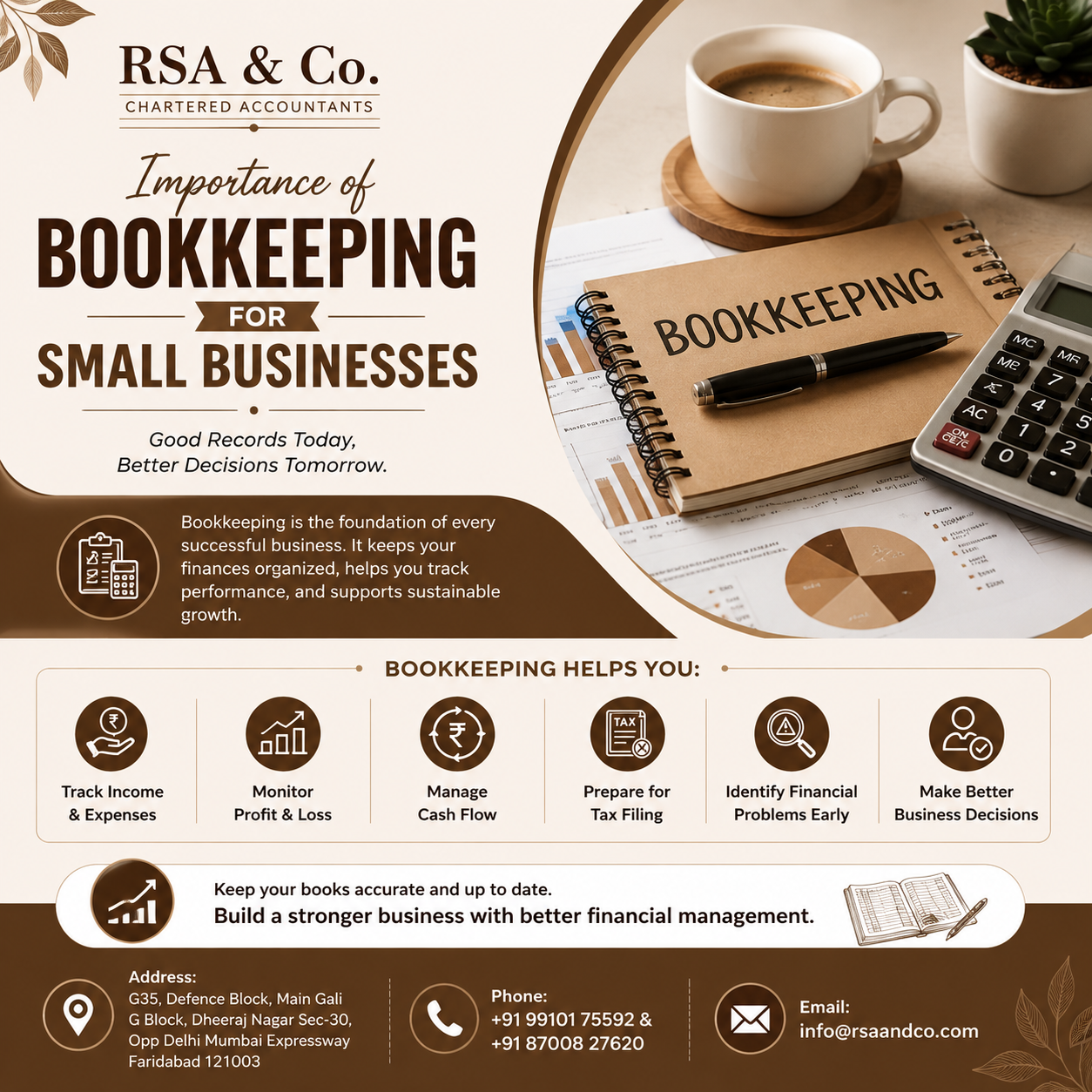
Bookkeeping is an essential part of managing any business, especially for small businesses. It involves recording and organizing daily financial transactions such as sales, purchases, expenses, payments, and receipts. Proper bookkeeping helps business owners understand their financial position and make better business decisions.
What Is Bookkeeping?
Bookkeeping is the process of maintaining accurate and organized records of a business’s financial transactions. It provides a clear picture of how much money is coming into the business, how much is being spent, and whether the business is making a profit or facing losses.
Maintaining proper books of accounts also makes it easier to prepare financial statements and manage tax-related requirements.
Why Is Bookkeeping Important for Small Businesses?
Helps Track Business Income and Expenses
Proper bookkeeping allows business owners to keep track of their income and expenses. It becomes easier to identify unnecessary expenses and understand where the business is spending money.
Helps Measure Profitability
Without accurate financial records, it can be difficult to know whether a business is actually profitable. Bookkeeping provides the information needed to calculate income, expenses, and overall profit or loss.
Supports Better Financial Decisions
Accurate financial records help business owners make informed decisions. They can use bookkeeping information to plan budgets, control expenses, set financial targets, and decide where to invest their money.
Makes Tax Filing Easier
Maintaining proper records can make the tax filing process more organized. Details of income, expenses, and other financial transactions can be easily reviewed when preparing tax returns and other required documents.
Improves Cash Flow Management
Cash flow is important for the day-to-day operations of a business. Regular bookkeeping helps business owners monitor available funds and plan payments for salaries, suppliers, rent, and other expenses.
Helps Identify Financial Problems Early
Regularly reviewing financial records can help identify unusual expenses, declining sales, unpaid invoices, or other financial problems at an early stage. This gives business owners an opportunity to take corrective action before the situation becomes more serious.
Benefits of Professional Bookkeeping Services
Small business owners often have limited time and resources. Managing bookkeeping along with daily business operations can become challenging. Professional bookkeeping services can help maintain accurate financial records and keep financial information properly organized.
A Chartered Accountant can also assist with accounting, financial reporting, tax compliance, and other financial requirements based on the needs of the business.
Conclusion
Bookkeeping is the foundation of effective financial management for small businesses. Accurate and timely records help business owners monitor their financial performance, manage cash flow, control expenses, and make informed decisions.
By maintaining proper books of accounts and taking professional financial guidance when required, small businesses can improve financial management and create a stronger foundation for long-term growth.