TDS Compliance for Businesses
Tax Deducted at Source (TDS) is an essential component of the Indian taxation system. It is a mechanism through which tax is collected at the source of income itself. Under this system, a person or business making certain specified payments is required to deduct tax before making the payment and deposit the deducted amount with the government. TDS helps the government collect taxes regularly and reduces the chances of tax evasion.
For businesses, TDS compliance is more than just a statutory obligation. It is an important aspect of financial management that ensures smooth operations and helps avoid penalties. Whether a business is a startup, partnership firm, LLP, private limited company, or sole proprietorship, understanding TDS provisions is crucial for maintaining compliance with tax laws.
Understanding TDS
TDS applies to various types of payments made during the course of business. These may include salaries, professional fees, contractor payments, rent, commission, brokerage, interest, and certain other specified transactions. The person making the payment is responsible for deducting the applicable tax and depositing it with the government within the prescribed time frame.
The deducted amount is credited to the PAN account of the recipient and can be claimed as a tax credit while filing the Income Tax Return. This system ensures that tax collection takes place throughout the year rather than at a single point in time.
Why TDS Compliance is Important
TDS compliance is important because it helps businesses fulfill their legal obligations under the Income Tax Act. Timely deduction and deposit of TDS reduce the risk of penalties and interest charges. Businesses that comply with tax regulations also maintain a positive reputation among clients, vendors, financial institutions, and government authorities.
Proper TDS compliance contributes to financial transparency and helps maintain accurate accounting records. It also minimizes the chances of disputes during tax assessments and audits. A business that follows compliance requirements consistently is better positioned for long-term growth and stability.
Key Responsibilities of Businesses
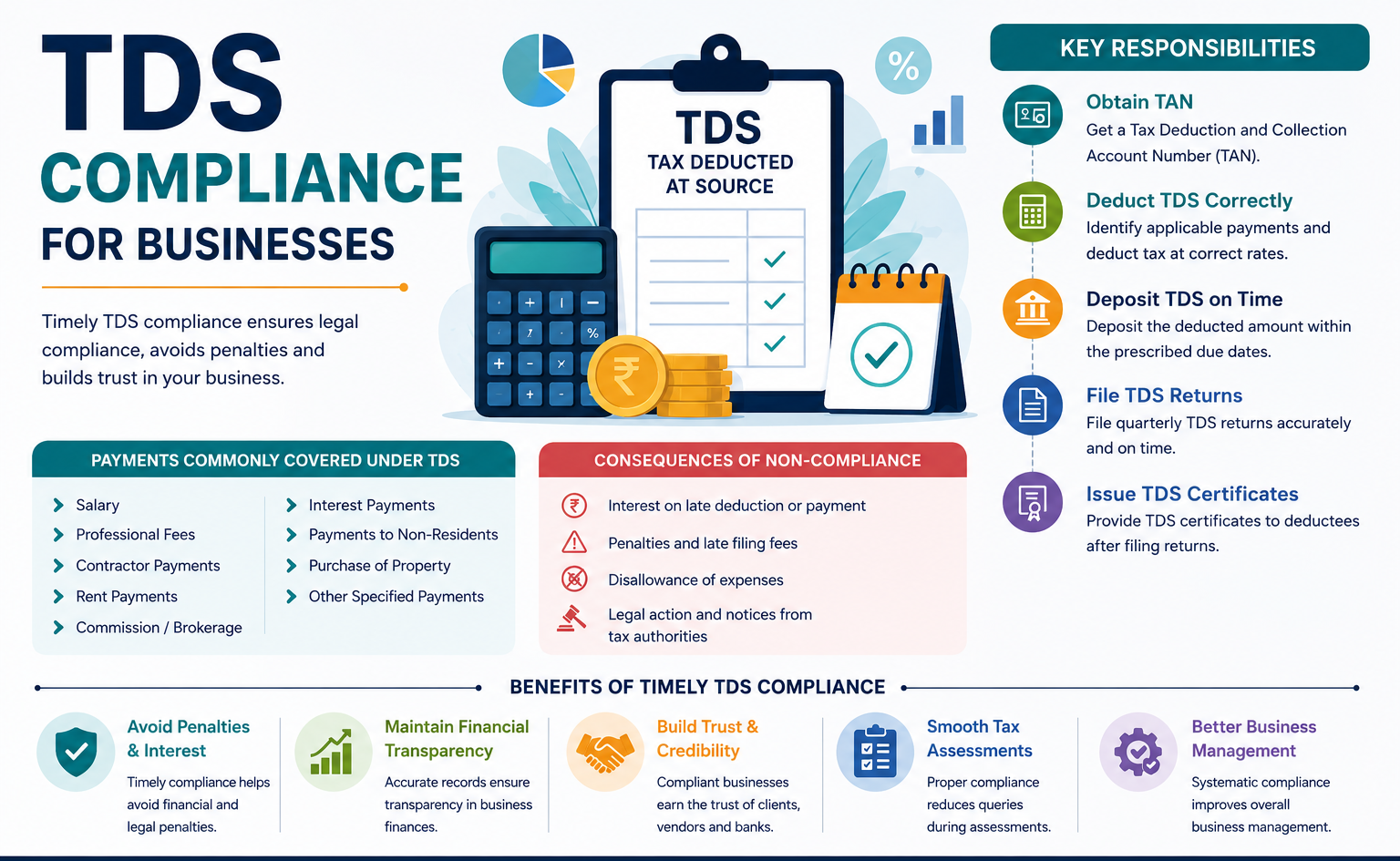
Every business responsible for deducting TDS must ensure that all compliance requirements are met. One of the first requirements is obtaining a Tax Deduction and Collection Account Number (TAN). TAN is mandatory for depositing TDS and filing TDS returns.
Businesses must identify transactions that attract TDS provisions and deduct tax at the applicable rates. The deducted amount should then be deposited with the government within the prescribed due dates. In addition, quarterly TDS returns must be filed accurately to provide details of deductions and deposits made during the relevant period.
Businesses are also required to issue TDS certificates to the recipients of payments. These certificates serve as proof that tax has been deducted and deposited on their behalf. Proper maintenance of records and supporting documents is equally important for ensuring smooth compliance.
Common Transactions Covered Under TDS
Several business transactions may attract TDS provisions. Some common examples include:
Salary payments to employees
Professional and consultancy fees
Payments to contractors and subcontractors
Rent payments for office premises
Commission and brokerage payments
Interest payments
Payments to non-residents
Certain high-value transactions specified under tax laws
The applicability and rate of TDS depend on the nature of the payment and the provisions prescribed by the Income Tax Act. Businesses should regularly review their transactions to determine whether TDS is applicable.
Consequences of Non-Compliance
Failure to comply with TDS regulations can result in significant financial and legal consequences. If a business fails to deduct TDS when required, it may be liable to pay interest and penalties. Similarly, delays in depositing deducted tax can attract additional charges.
Late filing of TDS returns may result in late fees and other penalties. In some cases, expenses on which TDS was not properly deducted may be disallowed while calculating taxable income, increasing the overall tax liability of the business.
Best Practices for Effective TDS Compliance
To manage TDS obligations efficiently, businesses should adopt a systematic approach. Maintaining proper accounting records is one of the most important practices. Accurate records help identify transactions that attract TDS and reduce the risk of errors.
Businesses should maintain a compliance calendar to track important due dates related to TDS deduction, payment, and return filing. Missing deadlines can lead to penalties, making regular monitoring essential.
The use of accounting software can simplify TDS calculations and automate several compliance-related processes. Businesses should also reconcile TDS records periodically to ensure consistency between accounting books and tax filings.
Regular review of tax provisions is important because tax laws and compliance requirements may change from time to time. Staying informed helps businesses remain compliant and avoid mistakes.
Role of a Chartered Accountant
Managing TDS compliance can be challenging, particularly for small and growing businesses. A Chartered Accountant can provide valuable assistance in identifying TDS-applicable transactions, calculating deductions accurately, filing returns, and ensuring timely compliance.
Professional guidance helps businesses stay updated with the latest tax regulations and reduces the likelihood of errors. Chartered Accountants can also assist in responding to notices from tax authorities and resolving compliance-related issues effectively.
By outsourcing compliance responsibilities to experienced professionals, businesses can focus on their core operations while ensuring that all statutory requirements are met.
Conclusion
TDS compliance is a crucial responsibility for businesses operating in India. Timely deduction, accurate deposit, proper return filing, and effective record maintenance are essential for avoiding penalties and maintaining compliance with tax laws. A well-structured compliance process not only reduces risks but also improves financial transparency and operational efficiency.
Businesses that prioritize TDS compliance are better equipped to manage their tax obligations and maintain a strong reputation in the marketplace. With proper planning, regular monitoring, and professional support when required, businesses can ensure smooth compliance and focus on achieving their long-term growth objectives.