For any business, maintaining accurate and transparent financial records is essential for long-term success. As a business grows, managing accounts, expenses, taxes, and financial transactions can become increasingly complex.
This is where regular financial audits play an important role. An audit provides an independent review of a company’s financial records and helps identify errors, inconsistencies, and potential financial risks.
What Is a Financial Audit?
A financial audit is a systematic examination of a business’s financial records, transactions, and statements. The purpose is to verify whether the financial information is accurate, reliable, and prepared according to applicable accounting and regulatory requirements.
A professional audit can give business owners greater confidence in their financial information and help them make better decisions.
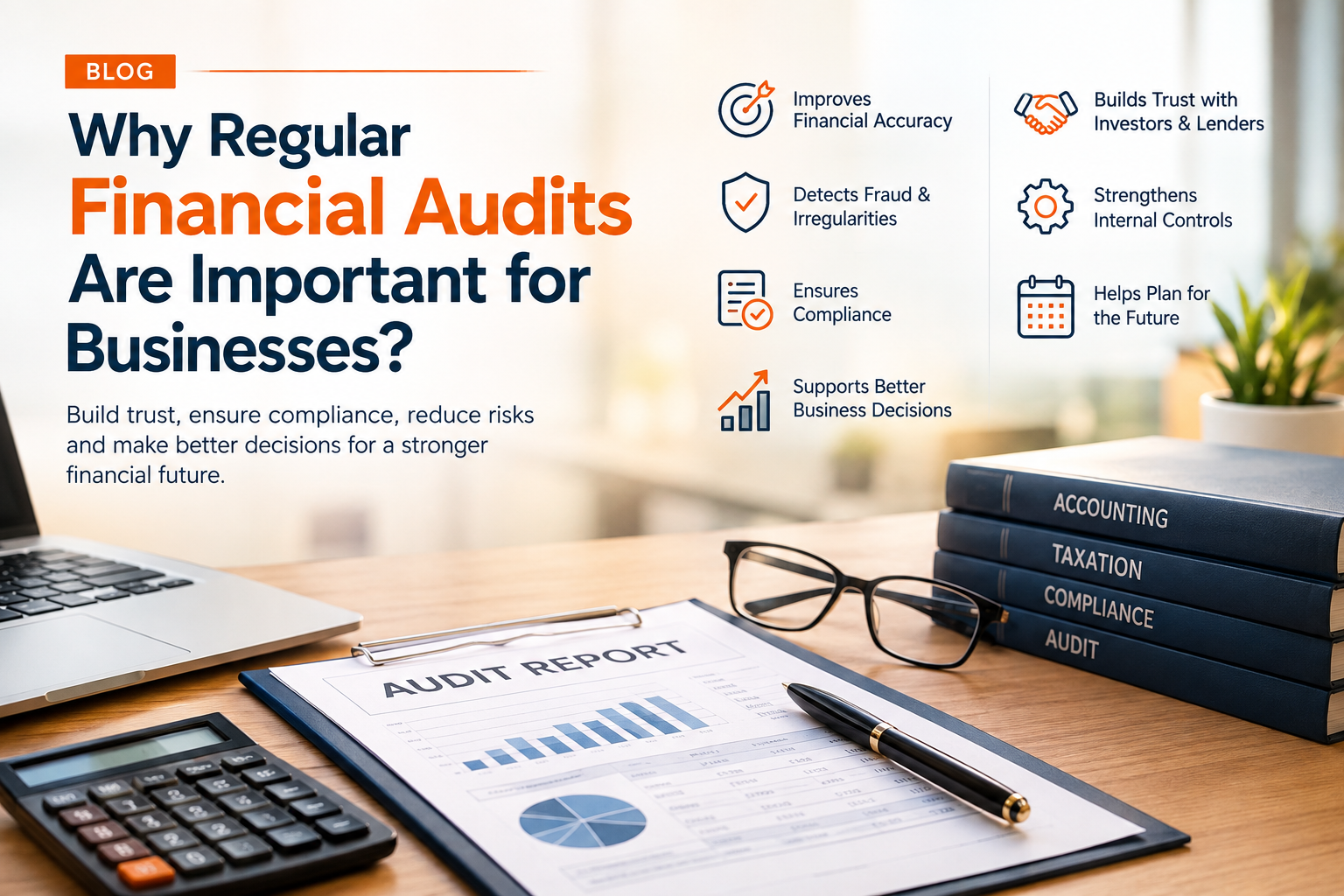
Why Are Regular Financial Audits Important?
Improves Financial Accuracy
Regular audits help identify accounting errors, incorrect entries, missing transactions, and discrepancies in financial records. Finding these issues early can prevent bigger problems in the future.
Helps Detect Fraud and Financial Mismanagement
An audit can help identify unusual transactions, unauthorized expenses, or other financial irregularities. While an audit cannot guarantee that all fraud will be detected, it can strengthen financial controls and reduce potential risks.
Ensures Better Compliance
Businesses need to comply with various accounting, taxation, and regulatory requirements. Regular financial reviews can help identify compliance issues and ensure that financial records are maintained properly.
Supports Better Business Decisions
Accurate financial information gives business owners a clearer understanding of their company’s financial position. This can help them make informed decisions about investments, expenses, expansion, and cash-flow management.
Builds Trust With Investors and Lenders
Transparent and properly reviewed financial statements can increase confidence among investors, banks, lenders, and other stakeholders. Reliable financial records can also make it easier for businesses to demonstrate their financial position when seeking funding.
Strengthens Internal Financial Controls
Audits can highlight weaknesses in a company’s accounting and financial processes. Businesses can use these findings to improve their internal controls and reduce the possibility of errors or financial losses.
Helps Businesses Plan for the Future
A clear understanding of financial performance makes it easier to prepare budgets, forecast cash flow, and set realistic business goals. Audit findings can provide valuable insights for future financial planning.
Who Should Consider Regular Financial Audits?
Financial audits can be valuable for:
Small and medium-sized businesses
Startups and growing companies
Established enterprises
Companies seeking external investment
Businesses applying for loans or financing
Organizations with complex financial transactions
The specific audit requirements may vary depending on the nature, size, and legal structure of the business.
How a Chartered Accountant Can Help
A Chartered Accountant can assist businesses throughout the audit process, from reviewing financial records and identifying discrepancies to providing professional insights and recommendations.
Beyond completing an audit, a CA can also help businesses improve accounting systems, strengthen financial controls, and maintain better financial practices.
Conclusion
Regular financial audits are not simply about checking numbers. They help businesses improve financial accuracy, identify potential risks, strengthen internal controls, and make more informed decisions.
For a growing business, maintaining transparent and reliable financial records can create a strong foundation for sustainable growth.