Introduction
A well-managed business needs more than just good sales and profits. It also requires proper financial controls to ensure that money is used responsibly, transactions are recorded accurately, and financial risks are reduced. Financial controls are the policies and procedures businesses use to monitor their income, expenses, payments, and other financial activities.
For small businesses as well as growing companies, strong financial controls can improve transparency, prevent errors, and support better decision-making.
What Are Financial Controls?
Financial controls are systems established by a business to manage and monitor its financial activities. These controls may include approval procedures, expense monitoring, bank reconciliation, budgeting, accounting records, and regular financial reviews.
The main purpose is to ensure that every financial transaction is properly authorized, recorded, and monitored.
Why Are Financial Controls Important?
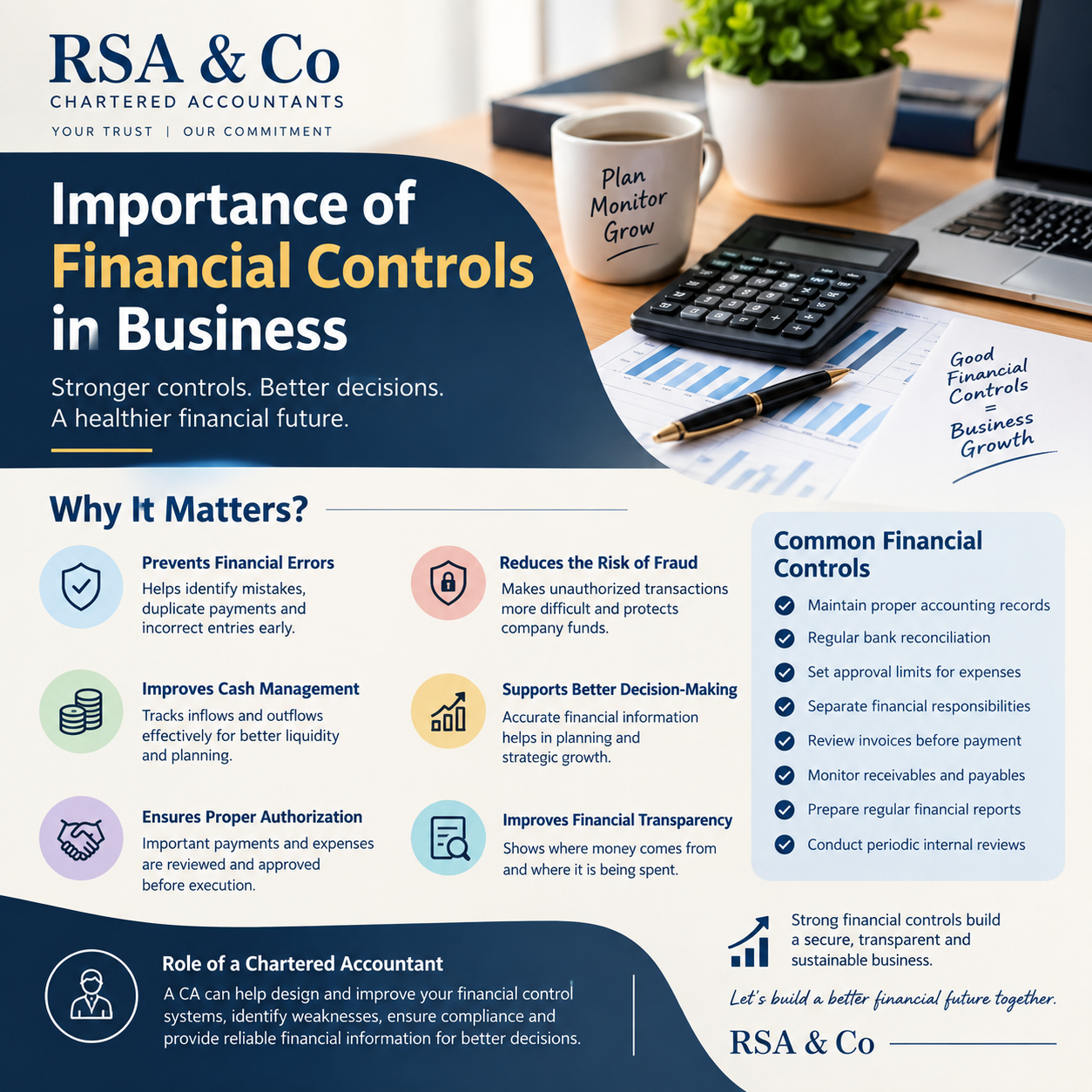
1. Prevents Financial Errors
Proper financial controls help identify accounting mistakes, duplicate payments, incorrect entries, and other errors at an early stage.
2. Reduces the Risk of Fraud
A proper approval and verification system makes unauthorized transactions more difficult and helps protect company funds.
3. Improves Cash Management
Businesses can track their cash inflows and outflows more effectively. This helps maintain sufficient funds for regular expenses and future requirements.
4. Supports Better Decision-Making
Accurate financial information allows business owners and management to understand the financial position of the company and make informed decisions.
5. Ensures Proper Authorization
Important payments and expenses can be reviewed and approved by the appropriate person before the transaction is completed.
6. Improves Financial Transparency
Well-maintained records make it easier to understand where the company’s money is coming from and where it is being spent.
Common Financial Controls for Businesses
Businesses can introduce several simple but effective controls, such as:
- Maintaining proper accounting records
- Regular bank reconciliation
- Setting approval limits for expenses
- Separating financial responsibilities among employees
- Reviewing invoices before payment
- Monitoring outstanding receivables and payables
- Preparing regular financial reports
- Conducting periodic internal reviews
Role of a Chartered Accountant
A Chartered Accountant can help businesses design and improve their financial control systems according to their size, structure, and requirements. Professional guidance can help identify financial weaknesses, improve accounting processes, monitor compliance, and provide management with reliable financial information.
Conclusion
Strong financial controls are an important part of a financially healthy business. They help reduce errors, control unnecessary expenses, protect business assets, and improve overall financial management. Businesses that establish proper financial controls from the beginning are better prepared to manage risks and achieve sustainable growth.
RSA & Co can assist businesses with accounting, financial management, compliance, and professional financial advisory services to build stronger and more effective financial systems.