Accurate financial documentation is an essential part of running a successful business. Whether a business is small, growing, or well-established, maintaining proper financial records helps business owners understand their financial position and make informed decisions.
Financial documentation includes invoices, receipts, expense records, bank statements, payroll records, tax documents, purchase records, and other important financial information. Keeping these records organized not only supports day-to-day accounting but also helps businesses remain prepared for tax and regulatory requirements.
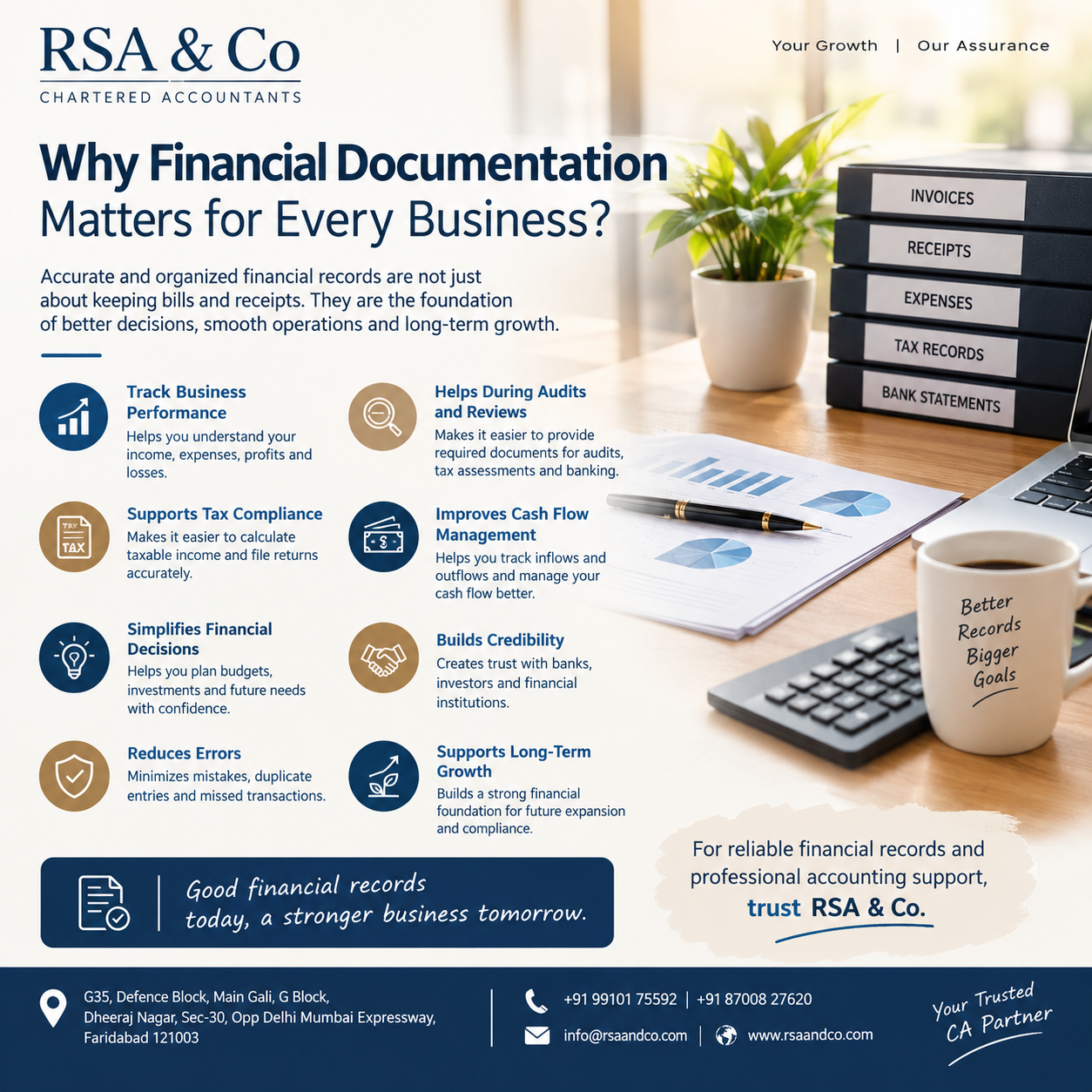
- Helps Track Business Performance
Proper financial records provide a clear picture of a business’s income, expenses, profits, and losses. Business owners can review this information to understand how the business is performing and identify areas that may require improvement.
- Supports Accurate Tax Compliance
Maintaining complete financial documentation makes it easier to calculate taxable income and prepare tax returns accurately. Proper records can also help businesses support their tax positions when required.
- Makes Financial Decisions Easier
Business decisions should be based on reliable financial information. Well-maintained records help business owners evaluate expenses, manage budgets, plan investments, and determine whether the business has sufficient funds for future requirements.
- Reduces the Risk of Errors
Poor record-keeping can result in missing transactions, incorrect calculations, duplicate entries, or overlooked expenses. A systematic documentation process reduces these risks and improves the accuracy of financial reporting.
- Helps During Audits and Reviews
Businesses may need to provide financial documents during audits, tax assessments, banking processes, or other official requirements. Organized records make it easier to locate and present the required information.
- Improves Cash Flow Management
Financial documentation helps businesses monitor money coming in and going out. By regularly reviewing receipts, payments, outstanding invoices, and expenses, businesses can manage their cash flow more effectively.
- Builds Business Credibility
Proper financial records can also be useful when approaching banks, investors, or other financial institutions. Clear documentation helps demonstrate that the business maintains a structured approach to its finances.
- Supports Long-Term Business Growth
As a business grows, financial transactions become more complex. Establishing good documentation practices from the beginning creates a strong financial foundation and makes it easier to manage increasing accounting and compliance requirements.
Conclusion
Financial documentation is more than simply keeping bills and receipts. It is an important part of effective financial management and business compliance. Accurate and organized records help businesses understand their performance, manage cash flow, prepare for tax requirements, and make better financial decisions.
For businesses looking to maintain reliable financial records and improve their accounting processes, RSA & Co can provide professional accounting and financial guidance tailored to their requirements.