As a business grows, its financial transactions, employees, customers, suppliers, and operational activities also increase. With this growth, managing every financial and operational activity becomes more challenging. This is where Internal Audit plays an important role.
Internal audit helps businesses review their financial processes, identify weaknesses, improve internal controls, and reduce potential risks. It provides business owners and management with a clearer understanding of how effectively their systems and processes are working.
What Is Internal Audit?
Internal audit is a systematic review of a company’s financial and operational processes. It involves examining records, transactions, procedures, controls, and business practices to identify errors, inefficiencies, risks, or areas that require improvement.
Unlike simply checking accounts, an internal audit looks at the overall effectiveness of financial and operational controls within the organization.
Why Is Internal Audit Important for Growing Businesses?
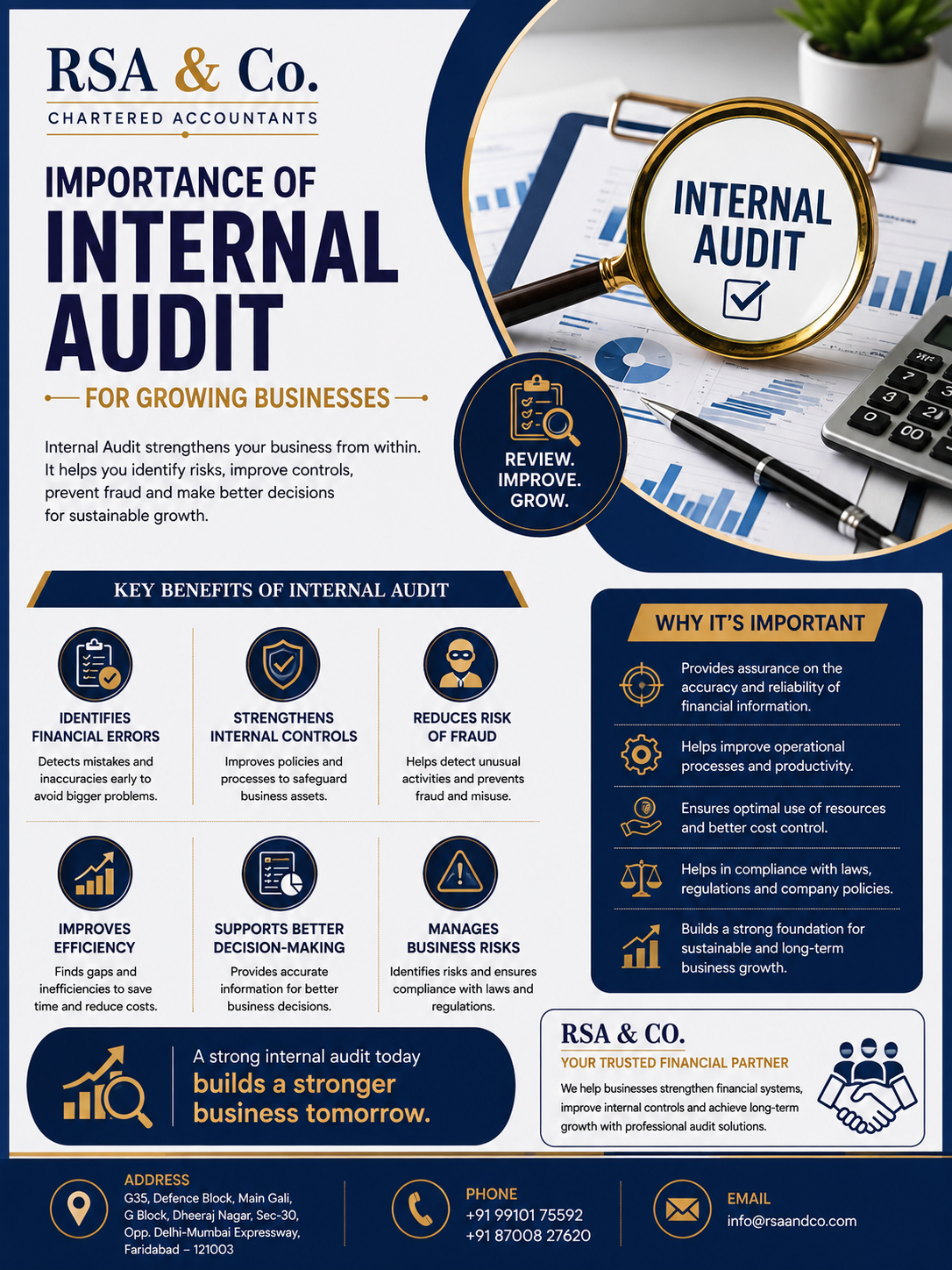
Helps Identify Financial Errors
As the volume of transactions increases, the possibility of accounting mistakes can also increase. Internal audits help identify incorrect entries, duplicate payments, missing records, and other financial discrepancies.
Finding these issues early can help businesses take corrective action before they become bigger problems.
Strengthens Internal Controls
Strong internal controls are essential for protecting a business’s financial resources. An internal audit evaluates existing controls and identifies areas where additional checks or procedures may be required.
This can include reviewing payment approvals, expense management, inventory controls, access to financial information, and authorization procedures.
Reduces the Risk of Fraud
Growing businesses may handle significant amounts of money and financial information. Weak controls can increase the risk of unauthorized transactions or fraudulent activities.
Internal audits can help identify unusual transactions, control weaknesses, and processes that may expose the business to financial risks.
Improves Operational Efficiency
Internal audit is not only about finding mistakes. It can also help businesses identify inefficient processes.
For example, an audit may reveal unnecessary steps in purchasing, payment processing, payroll, inventory management, or reporting. Improving these processes can save time and reduce operational costs.
Supports Better Financial Management
Accurate financial information is essential for making business decisions. Internal audits help management verify whether financial records and reporting processes are reliable.
Better financial information allows business owners to make more informed decisions regarding expenses, investments, budgets, and future growth.
Helps Manage Business Risks
Every growing business faces different types of risks, including financial, operational, compliance, and process-related risks.
Internal audit helps identify these risks and evaluates whether the business has appropriate controls in place to manage them effectively.
Key Areas Covered in an Internal Audit
Depending on the business and its requirements, an internal audit may review:
Financial transactions and accounting records
Cash and bank transactions
Purchase and sales processes
Expense management
Payroll procedures
Inventory management
Approval and authorization systems
Internal financial controls
Compliance procedures
Business reporting and documentation
Benefits of Professional Internal Audit Services
Managing an internal audit requires proper knowledge of accounting, financial controls, risk management, and business processes. Professional assistance can provide an objective review of the organization’s systems.
A Chartered Accountant can help businesses identify control weaknesses, review financial procedures, improve documentation, and recommend practical measures to strengthen internal processes.
Regular internal audits can also help management monitor whether previously identified issues have been properly addressed.
Internal Audit and Business Growth
A growing business needs more than increasing sales and revenue. It also needs strong financial systems and controls that can support its expansion.
As the organization becomes larger, informal processes may no longer be sufficient. Establishing structured financial controls and conducting regular internal reviews can help businesses maintain transparency, accountability, and financial discipline.
Conclusion
Internal audit is an important tool for businesses that want to grow in a controlled and sustainable manner. It helps identify financial errors, strengthen internal controls, reduce risks, improve operational efficiency, and support better decision-making.
By regularly reviewing financial and operational processes with professional guidance, businesses can build stronger systems and create a more secure foundation for long-term growth.