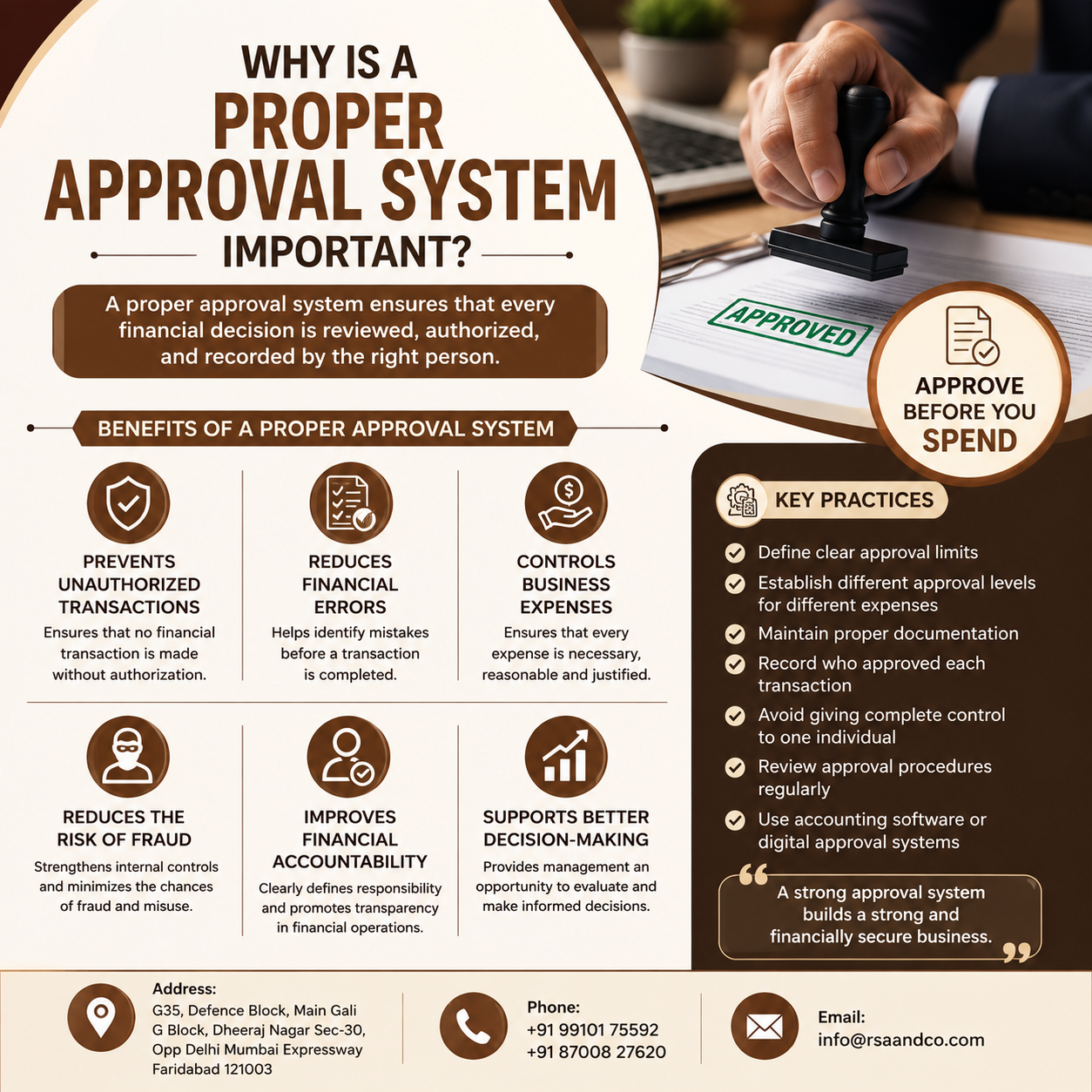
A proper approval system is an important part of effective financial management and internal control. In every business, financial transactions such as purchases, payments, expenses, reimbursements, and investments need to be reviewed and approved by the right person before they are processed.
Without a proper approval system, businesses may face unnecessary expenses, financial errors, unauthorized transactions, and even fraud. A well-defined approval process ensures that business decisions are properly reviewed and financial resources are used responsibly.
What Is an Approval System?
An approval system is a structured process in which specific business transactions or decisions are reviewed and authorized by designated individuals before they are completed.
For example, a small expense may require approval from a manager, while a large purchase or major investment may require approval from a senior management member or business owner.
The approval limits can be decided according to the size and requirements of the business.
Why Is a Proper Approval System Important?
Prevents Unauthorized Transactions
A proper approval system ensures that employees cannot make significant financial transactions without authorization. This reduces the possibility of unauthorized purchases, payments, or withdrawals.
Reduces Financial Errors
Mistakes can happen when financial transactions are processed without proper review. An approval system creates an additional checking step, helping businesses identify incorrect amounts, duplicate payments, or other errors before the transaction is completed.
Helps Control Business Expenses
Businesses need to monitor their expenses carefully. Requiring approval before spending money helps management review whether an expense is necessary and reasonable.
This can prevent unnecessary spending and improve overall cost control.
Reduces the Risk of Fraud
Strong internal controls can make it more difficult for fraudulent transactions to go unnoticed. When different people are responsible for requesting, approving, and recording transactions, there is greater accountability and transparency.
Improves Financial Accountability
A proper approval system clearly defines who is responsible for approving different types of transactions. This creates accountability within the organization and encourages employees to follow established financial procedures.
Supports Better Decision-Making
Approval processes give management an opportunity to review important financial decisions before money is committed. This helps businesses consider their budget, cash flow, business requirements, and potential risks before approving an expense or investment.
How to Create an Effective Approval System
Businesses should design an approval system according to their size, structure, and financial activities. Some useful practices include:
Define clear approval limits for different employees.
Establish separate approval levels for small and large expenses.
Maintain proper documentation for purchases and payments.
Keep records of who approved each transaction.
Avoid giving complete financial control to one individual.
Review approval procedures regularly.
Use accounting software or digital approval systems where appropriate.
Role of a Chartered Accountant
A Chartered Accountant can help businesses review their existing financial controls and identify areas where stronger approval procedures may be required.
Professional guidance can help businesses establish appropriate financial policies, improve documentation, strengthen internal controls, and reduce financial risks.
Conclusion
A proper approval system is more than just a business procedure. It is an important financial control that helps protect business resources, reduce errors, control expenses, and improve accountability.
By establishing clear approval responsibilities and regularly reviewing financial processes, businesses can create a more transparent and well-controlled financial environment. With professional guidance from a Chartered Accountant, businesses can develop internal financial controls that support both stability and long-term growth.